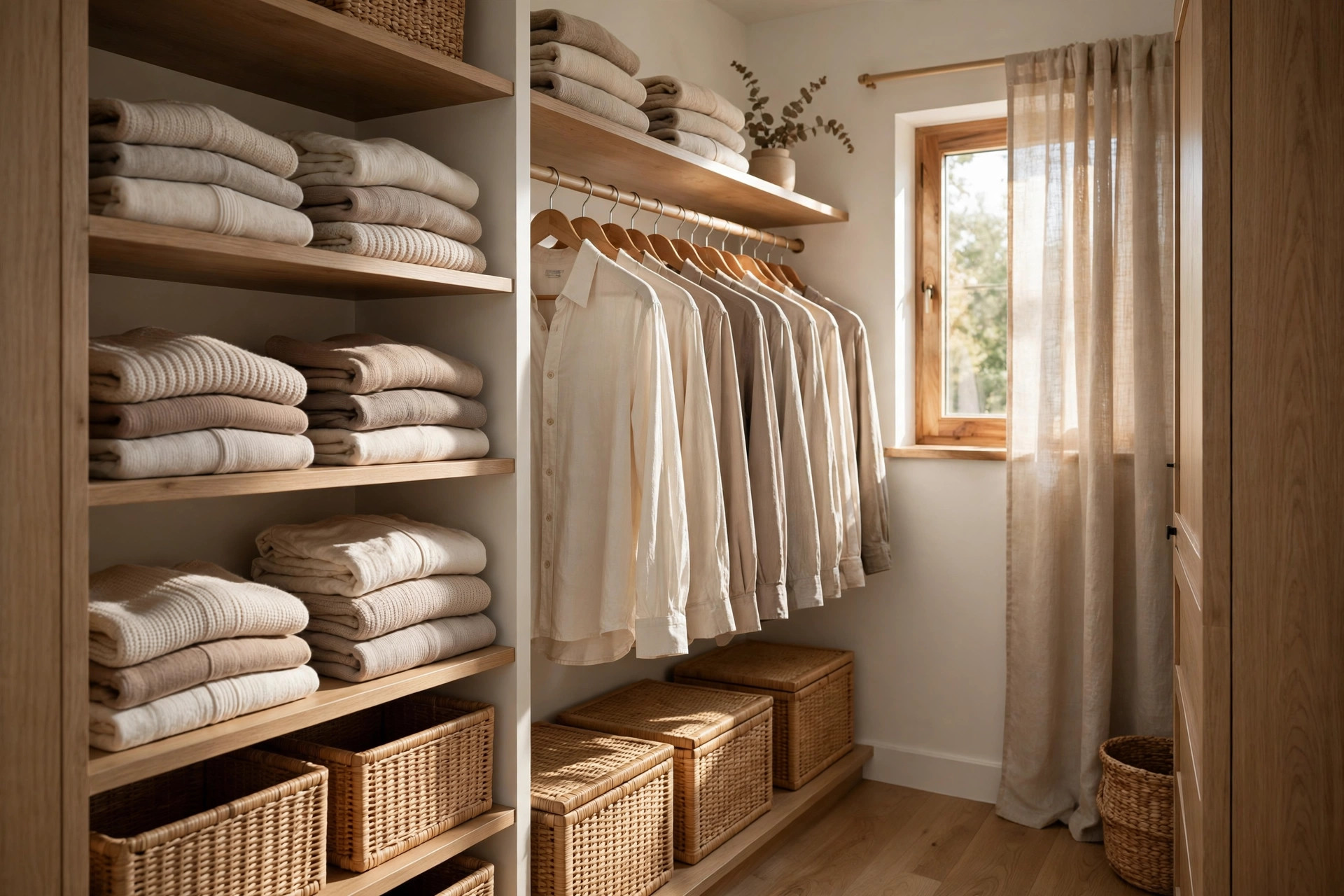
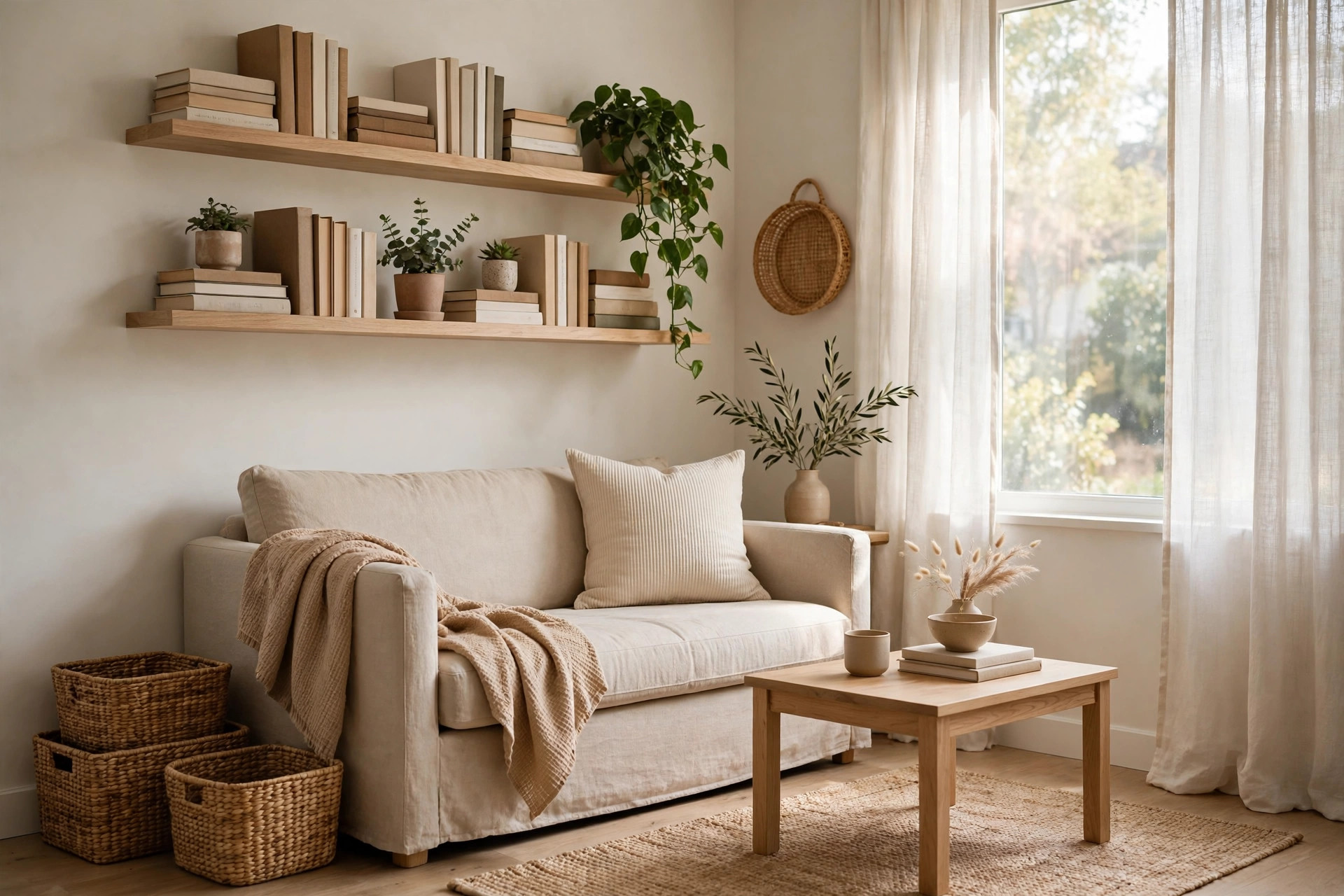

Finding homework station ideas for small spaces is less about buying a desk and more about claiming one small, consistent spot for homework. You do not need a spare room or a renovation budget. A fold-down desk, a closet nook, or a rolling cart can all work — as long as the spot is always ready and the supplies live within arm's reach.
Below are 14 ideas, a 7-step setup method, an age-by-age sizing guide, and a 5-minute reset routine.
What Makes a Homework Station Actually Work
Three rules decide whether a station gets used. First, the spot stays the same every day — kids focus faster when the brain reads the place as "work time." Second, everything needed lives within arm's reach. Third, the station packs away cleanly, so the dining table is a dining table again at dinner.
14 Homework Station Ideas for Small Spaces
Pick one idea that fits the space you already have — the goal this weekend is a working spot, not a perfect one.
1. The Fold-Down Wall Desk
A hinged desk that folds flat against the wall is the classic move. Mount it at elbow height with one shelf above, and fold it away when homework ends.
2. The Closet Homework Nook
Remove the door from a shallow closet, slide in a desktop cut to fit, and add a plug-in light and one shelf. The closet walls block distractions on three sides; our cloffice ideas show the full closet-office version.
3. The Rolling Cart Station
A three-tier rolling cart holds pencils, notebooks, chargers, and today's worksheets. Park it by the counter for homework time, then roll it away at dinner.
4. The Kitchen Counter Zone
For younger kids who still need a parent nearby, a stretch of kitchen counter works well. A stool, a supply caddy, and a tray holding only today's homework turn it into a study zone.
5. The Bedroom Corner Desk
A narrow desk — even 24 inches wide — in a bedroom corner gives an older child a quiet spot away from family traffic. Add a desk lamp and one basket for current materials.
6. The Under-Stairs Nook
The space beneath the stairs is often four feet wide and three feet deep — exactly enough for a small desk and a stool. Add a plug-in light, and check the ceiling is at least 55 inches high where the desk sits.
7. The Window-Side Study Spot
A small desk beside a window gives a child natural light and a view to rest their eyes on. Keep screens at a right angle to the window to avoid glare.
8. The Pegboard Supply Wall
Mount a pegboard above any desk and hang cups, hooks, and baskets for pencils, scissors, rulers, and chargers. Vertical storage keeps the desk surface clear.
9. The Shared Sibling Station
Two kids, one room, one station: use a long table with a clear zone per child, each with their own caddy and tray. Shared supplies live in the middle.

10. The Lap Desk and Floor Cushion
Not every child focuses best in a chair. A lap desk and floor cushion give younger kids a study spot that lives in a closet and comes out anywhere.
11. The Loft Bed Study Corner
If the bed is lofted or on risers, the space underneath is a ready-made study nook. A compact desk, a clip-on light, and a curtain divider create a cozy, private spot. Check there is enough headroom to sit upright first.
12. The Dining Table Pack-Away System
When the dining table is the only big surface, make the pack-away system the station: each child gets a lidded tray with their supplies. The double-duty room strategy from Apartment Therapy shows one family running exactly this setup.
13. The Hallway Alcove Desk
That odd hallway alcove — too small for furniture, too big to ignore — fits a shelf desk and a stool. Add a battery light and a small basket for books — it works because it is quiet and always free.
14. The Balcony or Landing Nook
A wide landing or enclosed balcony can hold a fold-down desk and stool for older students who want real quiet. Keep it weather-safe — nothing paper-based stays outside overnight — and treat it as a bonus spot, not the main station.
The 7-Step Setup Method (One Weekend)
Set yours up in this order.
- Pick the spot first. Watch where your child already does homework happily, then claim that corner.
- Measure the surface. Younger kids need about 36 inches; older students with a laptop need about 48.
- Add light before storage. A task lamp matters more than another organizer.
- Give every supply one home. Every supply gets a single spot.
- Keep only today's work out. Everything else goes to a shelf or a storage box.
- Test it for one session. Run a real assignment and move anything your child had to stand up for.
- Write the reset routine on a card. Tape the 5-minute reset below to the wall.
Match the Station to Your Child's Age
Ages 5–8 do best near a parent in the kitchen, at about 36 inches wide. Ages 9–12 suit a bedroom corner or closet nook at 36–42 inches, where quiet and a focused light matter most. Teens need about 48 inches in a quiet corner, with room for a laptop, papers, and charging.

Two kids sharing one station need separate zones, not one bigger desk. For longer study sessions, our storage ideas for a small home office cover the same tricks at adult scale.
Renter-Friendly Rules: No Holes, No Damage
Almost every idea above works in a rental: use Command strips or freestanding furniture instead of drilling, and keep anything heavy on the floor.
The 5-Minute Reset Routine
A station only works if it is ready tomorrow. After every session: file today's papers and stage tomorrow's; return every supply to its home; clear the desk; and plug in devices to charge.
"A homework station is not furniture. It is a promise that the same spot, the same supplies, and the same five minutes of tidying will be there tomorrow."
Frequently Asked Questions
Where should a homework station go in a small apartment?
Put it where your child already likes to work, near natural light and a power outlet. Younger kids do best near a parent in the kitchen; older students do better in a quiet bedroom corner.
How big does a homework desk need to be?
About 36 inches wide is enough for a younger child. Older students with a laptop plus papers need closer to 48 inches, with 20 to 24 inches of depth.
How do I set up a homework station for two kids in one room?
Use one long table with a marked zone per child, each with their own caddy and tray, and shared supplies in the middle. If space is very tight, stagger homework times by 30 minutes.
What supplies should live at the homework station?
Only the daily essentials: pencils, pens, an eraser, a ruler, scissors, a sharpener, today's papers, and a charger. Everything else belongs on a nearby shelf.
If the station shares a bedroom, our kids' bedroom organization ideas for small apartments show how to keep the whole room calm, and if you borrow a corner of your own workspace, our small home office organization ideas keep both stations from colliding. For budget desk builds, Apartment Therapy's IKEA desk hacks are a good place to steal ideas. Start with one idea this weekend and give the station two weeks.