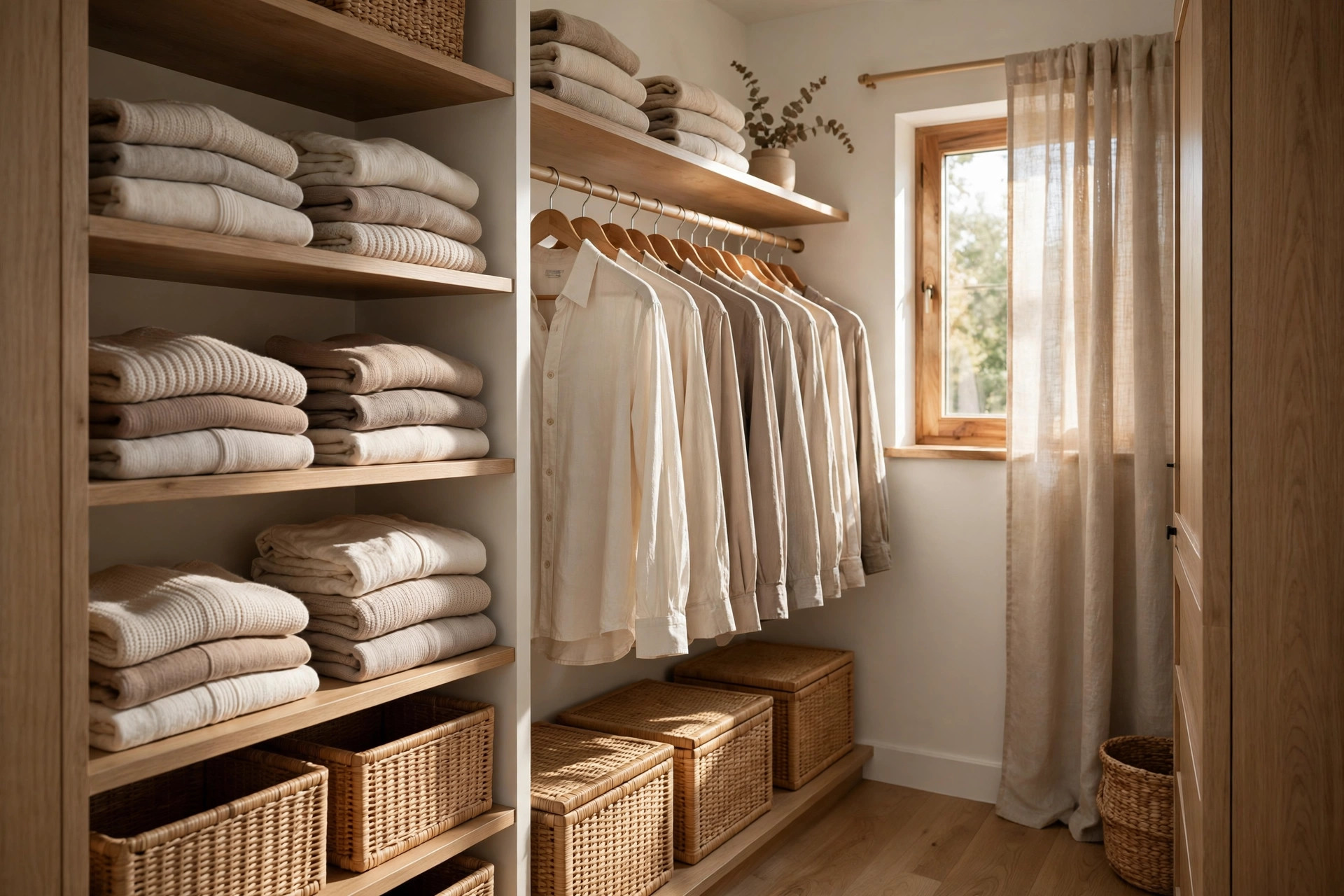
These reach-in closet organization ideas turn a shallow, single-rod closet into storage that actually works. Most reach-in closets are only about 24 inches deep and 4 to 8 feet wide, with one rod and one shelf — so the air below your clothes and the shelf above your head go to waste. The fix is a smarter layout, a few cheap tools, and one focused weekend — all renter-friendly and budget-first.

Measure First: 5 Numbers That Decide Everything
Before you buy a single bin, grab a tape measure: every idea below depends on these numbers.
- Width: wall to wall. Most reach-ins run 4 to 8 feet wide.
- Depth: usually about 24 inches. Keep shelves 12 to 14 inches deep.
- Ceiling height: usually 8 feet. The space above the rod is free storage.
- Rod height: floor to your current rod. Double-hang works best at 80 inches (top) and 40 inches (lower).
- Door clearance: how far the door swings. An over-the-door organizer needs about 2 inches.
12 Reach-In Closet Organization Ideas That Double Your Space
1. Empty It Completely First
Take everything out — clothes, shoes, the boxes on the top shelf. Sort into keep, donate, and store elsewhere; anything unworn in the last year is a donate candidate. This step alone usually frees a quarter of the closet. For a gentler way through the keep-or-let-go calls, see our room-by-room decluttering checklist.
2. Add a Second Rod
This is the single biggest win. Shirts, blouses, and folded pants need far less height than a full-length rod gives them, so two short rods hold about twice as many clothes in the same width. Apartment Therapy's closet layout guide puts the top rod near 80 inches and the lower rod near 40 inches. Renters: a hook-on rod extender hangs from your existing rod for $10–$20, no drilling.
3. Switch to Slim, Matching Hangers
Bulky plastic and wooden hangers eat rod space and let clothes slide off. Slim velvet hangers take up noticeably less room per garment and stop slippery tops from ending up on the floor. Swap one section first if money is tight — even half a rod frees real inches.
4. Reserve a Narrow Section for Long Items
Dresses, long coats, and full-length pieces need height, not width. Give them a slim 12- to 18-inch section with 60 to 72 inches of clear height; keep double-hang rods everywhere else. Sharing a rod with short items makes long pieces drag on shoes below — or forces the whole rod to stay high.
5. Stack a Shelf Tower in the Middle
A freestanding shelf tower or cube unit turns wasted air into storage for folded clothes, bags, and bins. Place it in the center or at one end, shelves 12 to 14 inches apart, stacks of four or five items sorted by type. Folded items take about a third of the space hanging clothes do.

6. Use Labeled Bins on the Top Shelf
The top shelf is the hardest spot to reach, so it should hold things you touch rarely: off-season clothes, spare bedding, keepsakes. Put them in clear, labeled bins instead of loose stacks — you can see what is inside without pulling every box down.
7. Claim the Floor With a Low Shoe Rack
Shoes scattered across the floor block bins, collect dust, and eat the space your shelf tower needs. One defined shoe zone fixes it: a low angled rack, flat shelves, or clear shoe boxes. Most pairs need roughly 9 to 12 inches of width. Keep only weekly shoes here; the rest belong in labeled bins up top.
8. Hang an Over-the-Door Organizer
The inside of the closet door is free storage most people never use. A clear-pocket organizer holds scarves, belts, sunglasses, socks, and jewelry. It hangs on hooks, leaves no marks, and comes off in seconds. For sliding or bifold doors, use adhesive hooks on the wall beside the door.
9. Add Shelf Dividers
On open shelves, pulling one sweater from the middle topples the whole stack. Shelf dividers split the shelf into narrow bays so each stack stands on its own. Sort each bay by type and the shelf stays tidy for weeks instead of days.
10. Clip Under-Shelf Baskets Under the Shelf
That single builder-grade shelf has a whole unused layer underneath it. Under-shelf baskets hook on and slide in like a drawer, perfect for underwear, socks, and scarves. They cost a few dollars each and need no tools.
11. Put Everyday Clothes in the Golden Zone
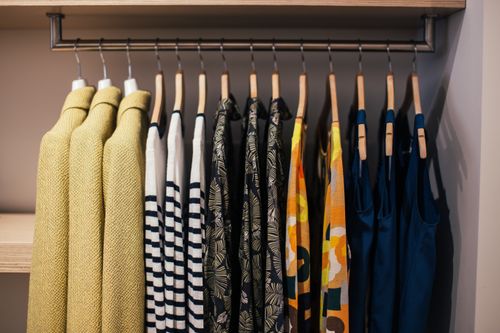
Not all closet space is equal. The easiest-to-reach band — roughly waist to eye level — is your golden zone, and it belongs to the clothes you wear every week. Put daily outfits there, sorted by type and then by color, so getting dressed takes seconds. Our guide to sorting clothes by color on hangers walks through a simple system.
12. Keep It That Way: One In, One Out
An organized closet refills itself unless you have a rule. One in, one out is the simplest one that works: every new item in means an old one out — donated, sold, or recycled. Pair it with a 10-minute weekly reset. If your closet overflows for lack of a dresser, our ideas for storing clothes without a dresser cover the overflow.
"A reach-in closet isn't short on space — it's short on zones. Give every inch a job, and the same closet holds twice as much."
Your Weekend Checklist
- Saturday morning: Empty the closet, clean it, sort keep / donate / store elsewhere.
- Saturday afternoon: Measure and sketch the layout.
- Saturday evening: Buy only what your measurements call for.
- Sunday morning: Install the second rod, set up the shelf tower, hang the door organizer.
- Sunday afternoon: Put clothes back by zone, golden zone first; label the bins.
- Every Sunday after: 10-minute reset: re-fold, return strays, one item out for every item in.
3 Mistakes That Shrink a Reach-In Closet
Buying bins before measuring. Containers an inch too wide or too deep are useless in a 24-inch closet. Measure first, buy second.
Using shelves deeper than 14 inches. Clothes vanish into the back and you buy duplicates of things you already own.
Filling the depth front to back. Pushing clothes to the back wall hides half your wardrobe behind the front row.
Frequently Asked Questions
How deep is a standard reach-in closet?
About 24 inches deep and 4 to 8 feet wide, with an 8-foot ceiling. Shelves should be 12 to 14 inches deep.
Can I organize a reach-in closet without drilling?
Yes. Use a hook-on rod extender for a second level, a freestanding shelf tower for folded clothes, and an over-the-door organizer for accessories. Apartment Therapy's 20 small closet storage ideas has more no-drill options.
How much extra space does a double-hang rod add?
For wardrobes that are mostly shirts and folded pants, a second rod roughly doubles hanging capacity. The gain is smaller for long dresses and coats — which is why those get their own narrow section.
What should I store on the top shelf?
Things you reach for less than once a month: off-season clothes, spare bedding, keepsakes, luggage — in clear, labeled bins.
A reach-in closet will never be a walk-in — but it does not need to be. With a second rod, a shelf tower, and a zone for every category, the closet you already have can hold twice as much. Start this Saturday.